

Understand heating · The essentials
The science of warmth.
In everyday language.
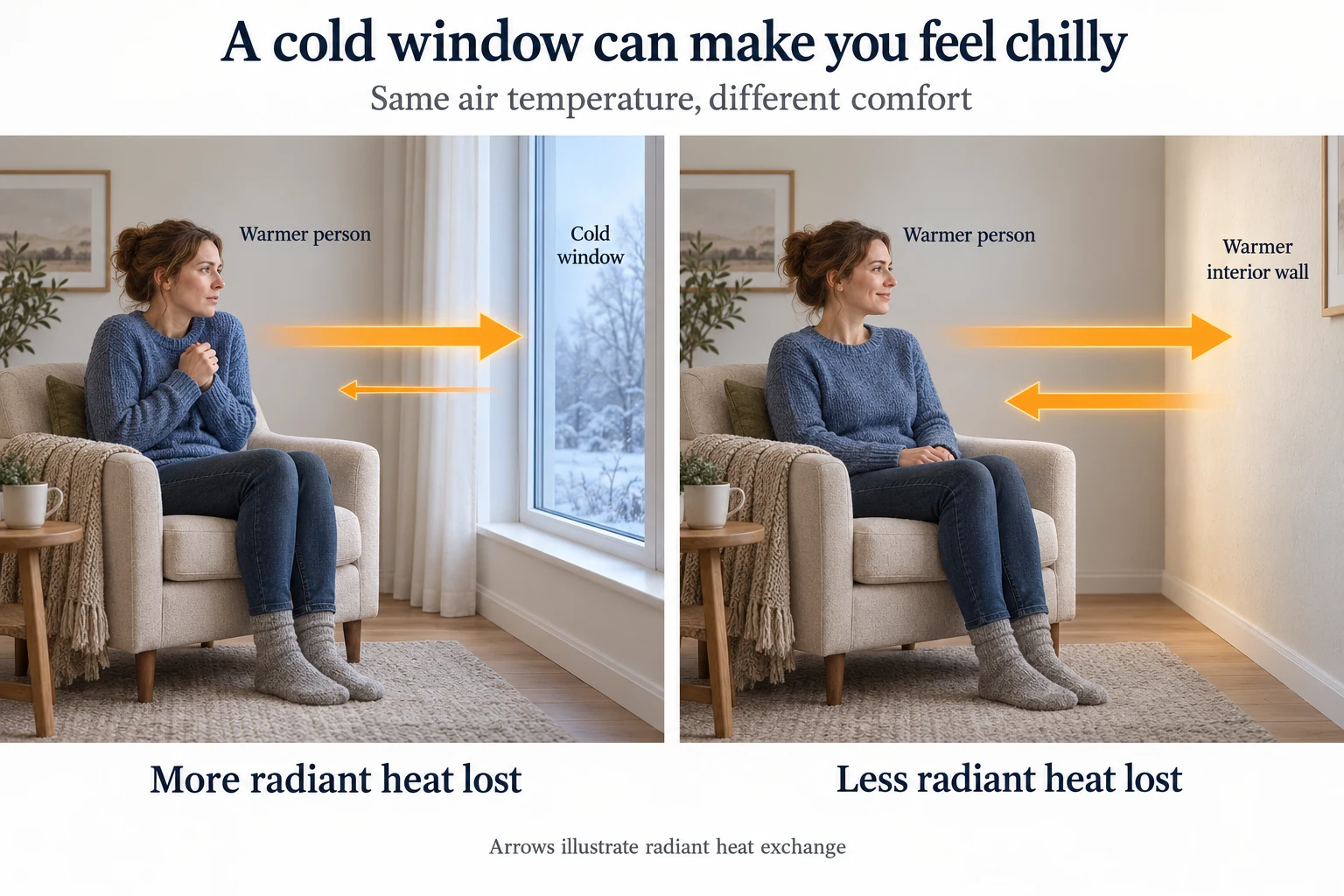
Why does sunshine feel warm on a cold day? Why can a cold window make a room feel chilly? Understanding how heat moves makes choosing and using heating much easier.
How heat moves · What makes you comfortable · Energy and running costs · Thermal-camera pictures
Three ways heat moves
Conduction. Convection. Radiation.
Conduction
A metal spoon gets warm when it sits in a hot drink. Heat passes through the material from its warmer part towards its cooler part. Heat can also travel through the fabric of a building.
Convection
Air warmed beside a heater rises as cooler air takes its place. This circulation spreads warmth around a room. Moving water carries heat around a wet central-heating system too.
Radiation
Objects exchange heat through electromagnetic radiation. You can feel radiant warmth from sunshine or a fire without touching it. No moving air is needed to carry this energy between surfaces.
An infrared panel also warms nearby air. A conventional radiator emits radiant heat as well as warming circulating air. The proportions depend on its design and operating temperature.
Comfort is more than an air temperature
The warmth you feel
comes from your surroundings.
On a cold day, stepping into sunshine can make you feel warmer without the surrounding air suddenly getting hotter. Indoors, warm and cold surfaces also affect the heat your body exchanges with the room.
Air movement, clothing and activity matter too. Two rooms showing the same thermostat temperature can feel different.
Understanding infrared
Invisible warmth.
No special mystery.
Infrared is part of the electromagnetic spectrum, outside visible light. Objects at everyday temperatures, including walls, furniture and our bodies, emit thermal infrared radiation.
Domestic far-infrared panels have a heated surface that transfers a significant share of its warmth by radiation. Surface temperature and materials affect the radiation emitted; there is no single “magic wavelength” that guarantees lower bills.
A warmed surface can then exchange heat with other surfaces and nearby air. This takes energy and time, especially in a cold building.
Read about infrared heating →What happens at a window?
Visible sunlight and far-infrared heat do not behave identically at glass. Ordinary glass absorbs long-wave infrared rather than transmitting it like visible light. Low-emissivity coatings can reflect more of that long-wave radiation.
Windows can still be a source of heat loss. The glazing, its temperature and the surrounding construction all matter. Position heaters for useful room coverage and follow the manufacturer’s instructions.
Pilkington’s explanation of glass and infrared ↗Energy, storage and running costs
Follow the energy.
Then look at the controls.
Illustrative tariff only. Use your own unit rate. A thermostat changes how long the heater draws power; the daily standing charge is separate.
Watts describe power.
A 1,000-watt heater drawing full power for one hour uses 1 kWh. The cost is that energy multiplied by your electricity unit rate. A thermostat affects how long the element draws power.
A core stores warmth.
Clay-core and storage heaters absorb heat while charging and release it as they cool. Stored warmth is energy used earlier, rather than free extra heat. The amount stored and how it is controlled vary by heater.
The building loses heat.
Insulation and draught reduction can reduce the heat needed to maintain comfort. Heating controls help match supply to demand. Useful heat storage changes timing; it does not remove heat loss.
Comfort and conversion efficiency are different questions.
Direct electric heaters convert almost all their electricity into heat at the point of use. Your bill still depends on energy use, tariff, control and the warmth you need. A smaller wattage label alone is not proof of a saving.
Heat pumps work differently: they move heat from the outside environment and can deliver several units of heat per unit of electricity used. Compare the complete system, not just the heater rating.
Electric resistance heating: Department of Energy factsheet (PDF) ↗See the simple running-cost exampleUse the infrared room calculator ↗
Making invisible warmth visible
What a thermal camera shows.
Thermal pictures help us see differences in apparent surface temperature. They do not show air temperature or prove how much a heating system costs to run.

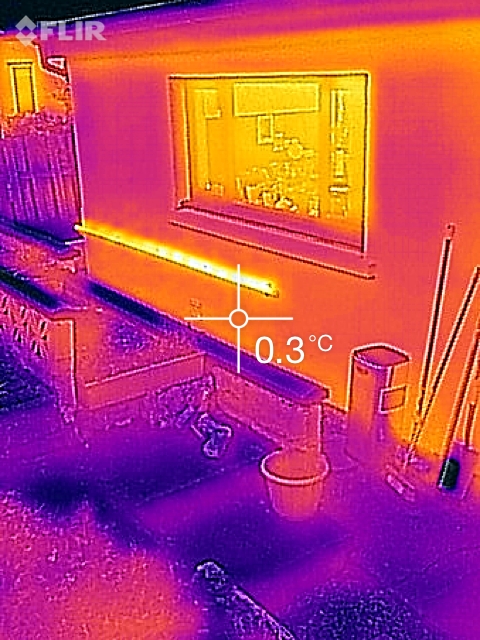
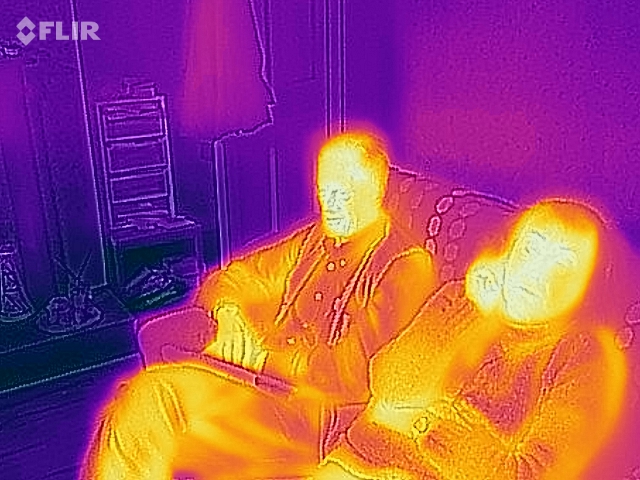
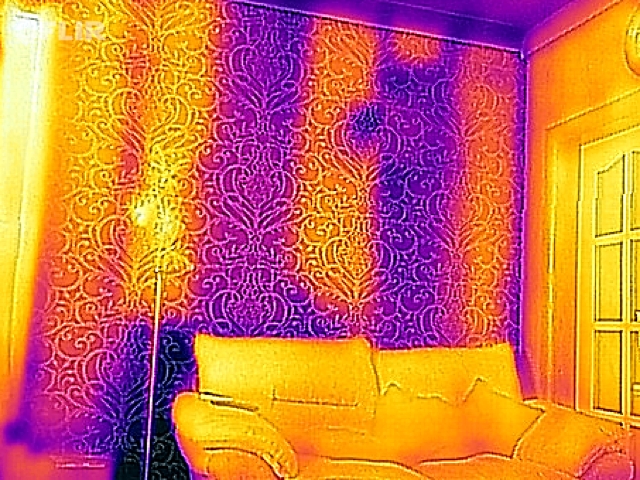
Colours depend on the camera’s scale and settings. Surface emissivity and reflected radiation can affect readings; glass and shiny surfaces require particular care. An image alone cannot diagnose insulation defects. How FLIR explains thermal-camera readings ↗
Put the science to use
Four practical things to remember.
- Reduce unwanted heat loss before expecting a new heater to transform your bills.
- Match heater output and coverage to the room and occupied area.
- Use compatible thermostats and schedules for the times you need warmth.
- Compare the electricity tariff and likely energy use, not just product claims.
Compare heating approaches →Ask about your home
Further reading: US Department of Energy: heat flow; Energy Saving Trust: infrared heating; Energy Saving Trust: heat pumps. Reviewed 25 October 2026.